FileHive
AES-256 encrypted cloud storage platform with nested folder management and Redis-powered caching. Containerized with Docker and deployed via GitHub Actions CI/CD.
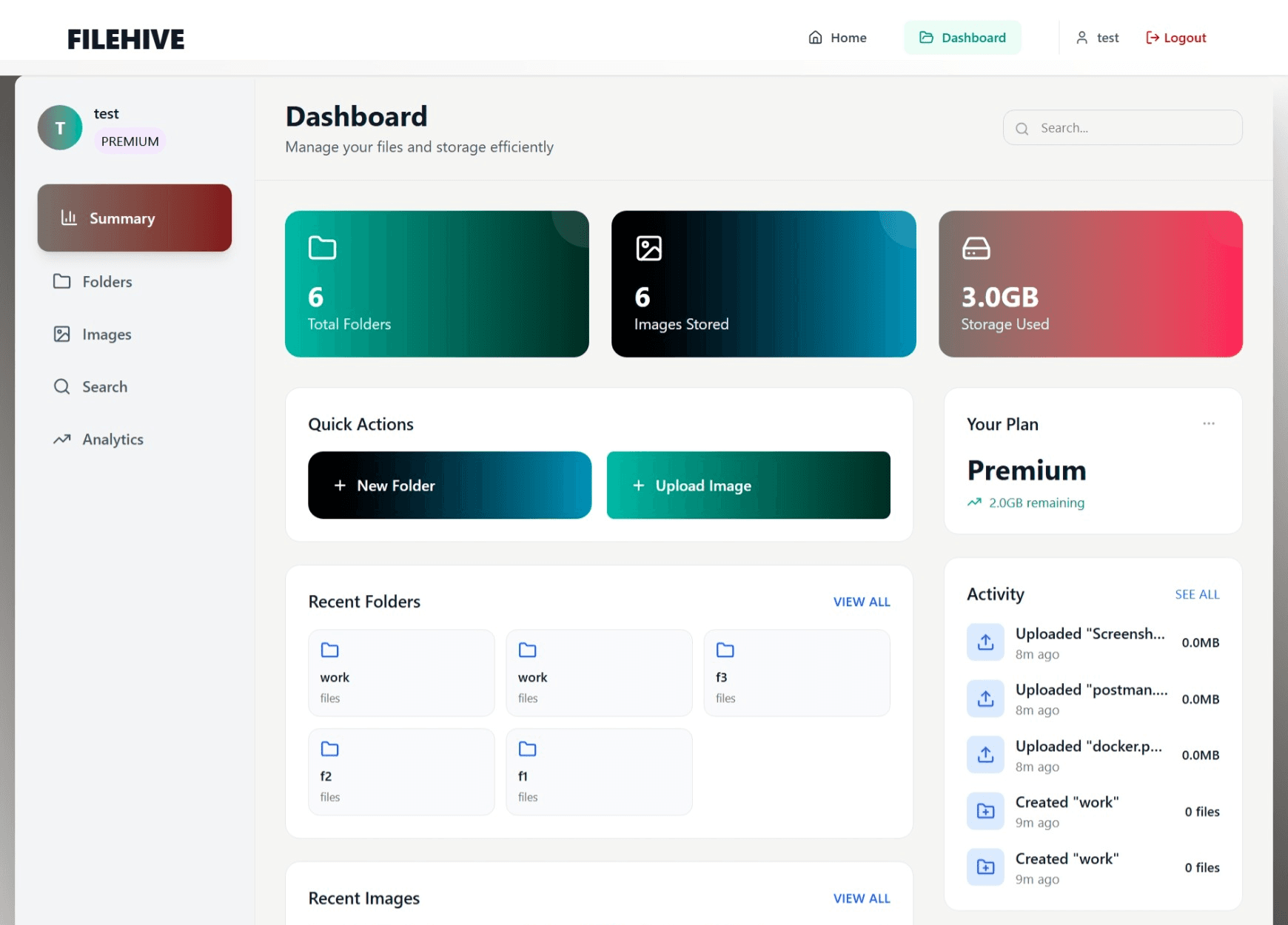
98.4%
Cache Hit Ratio
50MB/s
Upload Throughput
99/100
Lighthouse Score
10,000+
Assets Managed
Executive Overview
FileHive provides secure, enterprise-grade cloud file management featuring client-side and server-side AES-256 encryption, granular sharing permissions, dynamic folder nesting, and sub-10ms Redis metadata caching.
Problem Statement & Objective
Traditional cloud file storage platforms often expose raw unencrypted user files to cloud storage providers, lack granular access controls, and slow down under heavy directory navigation.
System Architecture & Data Flow
Decoupled architecture with React single-page application client, Express REST API Gateway, Redis in-memory cache, Cloudinary media storage, and Docker containerization.
Database Design & Schemas
Hierarchical adjacency list schema in MongoDB for nested directory trees, paired with Redis key-value hashing for sub-10ms directory listings.
Key Engineering Features
- AES-256 Client-Side File Encryption & Integrity Verification
- Nested Directory Hierarchy & Dynamic Search
- Sub-10ms Metadata Caching via Redis
- Automated GitHub Actions CI/CD Pipeline
- Instant File Sharing & Expiration Link Controls
Primary Engineering Challenge
Handling multi-gigabyte file chunk uploads without exhausting server memory or timing out Node.js connection pools.
Implemented Technical Solution
Implemented streaming chunked multipart uploads directly to cloud storage buckets, completely bypassing server RAM bottlenecks.
Security Controls
Client-side AES-256 key derivation using PBKDF2, strict CORS policies, and expiring access tokens.
Scalability Strategy
Stateless API instances containerized with Docker, leveraging Redis for session sharing and Cloudinary CDN for global media delivery.
Key Technical Takeaways
Streaming uploads directly to cloud storage reduces server memory usage by 95% during large file operations.
Future Roadmap & Improvements
Add client-side folder ZIP compression before upload and support team organization workspaces.